Most capsule wardrobes fail in the same way. Someone reads a list, buys twelve items in one weekend, and discovers within a month that the pieces do not match their actual week. The list said two pairs of trousers; they need four, because they work five days and one pair is always in the wash.
A capsule is not a shopping list. It is a more deliberate version of what you already reach for.
The four tests
Every piece below had to pass four checks. They are worth applying to anything you are considering.
- Frequency. Worn at least once a fortnight in its season, or the only thing that covers a specific occasion. A garment worn twice a year is not a capsule piece; it is storage.
- Compatibility. Works with at least four other pieces on the list. This is the test most capsules fail — a beautiful pair of wide-leg trousers that works with one top is not a capsule piece, however good it is.
- Cost per wear. Under £1 per wear over its life. A low bar for a coat, a demanding one for a dress.
- Replaceable. You could buy it again in two years. Capsule pieces are worn hard, and a piece you can never find again becomes a problem the moment it wears out.
Twelve is a starting point, not a rule. What matters is the ratio: roughly half tops, a quarter bottoms, a sixth outerwear, one wildcard. If you need fourteen because you work five days a week and cycle there, take fourteen and keep the ratio.
The twelve
Six tops
Six is more than most guides allow, and it is correct. Tops are what people see, what gets laundered most, and what wears out first. Under-buying tops is the most common reason a capsule collapses in week three.
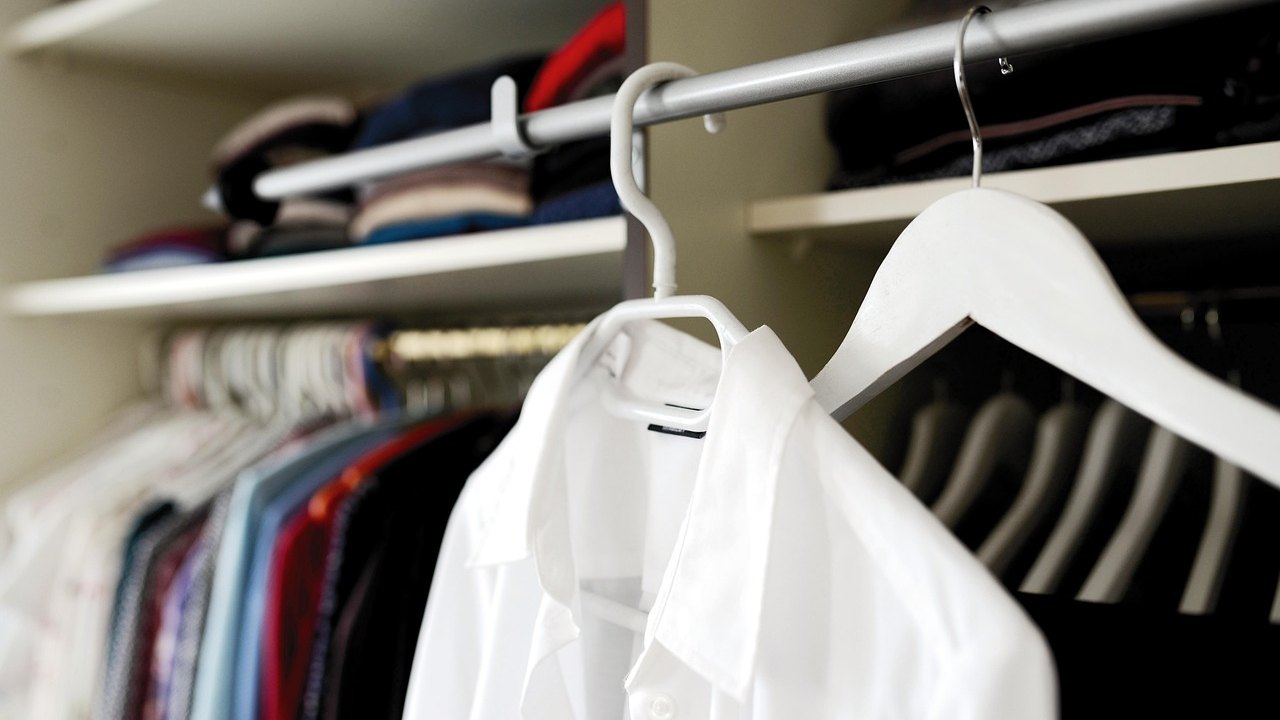
1. A white shirt, properly cut. Covers work, dinner, travel and everything between. Look for cotton poplin with a visible weave rather than a thin stretch blend, and check the placket — the strip down the button line — because a flimsy placket buckles first. The shoulder seam should sit exactly on the point of your shoulder. £45–£90; above £120 you are paying for a brand unless it is made to measure.
2. A heavyweight cotton T-shirt. 220gsm or heavier, a ribbed doubled neckline, and side seams rather than a tubular body — tubular knits twist after washing. £25–£55, and the category where paying more genuinely buys more.
3. A fine-gauge knit in a colour that flatters you. Merino or a merino-cotton blend. Hold it to the light: if you can see your hand clearly through it, it will pill within weeks. £60–£140; below £60 you are usually buying acrylic, which pills and holds odour.
4. A long-sleeve cotton top. The bridging piece for the two months a year when a T-shirt is too little and a knit is too much.
5. A second knit in a different weight. One fine, one chunky. Two knits that layer together are worth more than three that do not.
6. A shirt you can wear open. Denim, chambray or a soft cotton twill. It works as a third piece over a tee and under a coat, which makes it the hardest-working item here.
Three bottoms
7. Straight-leg wool trousers. Wool or a wool-heavy blend with a little elastane for recovery. Look at the waistband — a curtain waistband with a separate inner facing is the mark of a trouser built to be worn. £90–£200.
8. Dark denim, straight or slightly tapered. The piece that makes the other eleven wearable at the weekend.
9. A midi skirt or a second trouser. Whichever you will actually wear. Be honest: if you have not worn a skirt in two years, the second trouser is the right answer, and buying the skirt because a list told you to is how capsules die.
Two outer layers
10. A wool coat. The highest-leverage purchase in the wardrobe, because you wear it more than anything else. Seventy per cent wool minimum, a full separately cut lining, and a generous seam allowance at the shoulder. £180–£450.
11. A lighter jacket. Denim, cotton twill, or an unlined blazer — for the six weeks a year when the coat is too much.
One wildcard
12. Whatever you love. A dress, a jumpsuit, a printed skirt. This slot exists because a wardrobe with no joy in it gets abandoned, and the discipline of the other eleven is what makes one indulgence affordable.
Where the money goes
Spend on the pieces you wear weekly: trousers, shoes, the coat. Buy the cheapest acceptable version of anything you wear monthly. The coat and the trousers are where quality is visible and where the cost per wear arithmetic actually moves.
A useful split for a £1,500 budget: £450 on the coat, £300 on trousers, £300 on shoes, £250 on knits, and the remaining £200 spread across the six items you wear least.
Three mistakes
Buying it in one weekend. The first month should involve buying nothing. Record what you wear for thirty days, then build around the result. A capsule assembled from a list is a hypothesis; one assembled from a month of notes is a finding.
Making it all neutral. A wardrobe of navy, grey and cream is a wardrobe with no accent, and after six weeks it reads as a uniform. Keep two bases and one accent.
Forgetting shoes. Shoes decide more outfits than any other category, because a garment that works with one pair and not the others is only wearable on the days that pair is appropriate. Plan three pairs alongside the clothes.
The short version
- Twelve is a ratio, not a rule: half tops, a quarter bottoms, a sixth outerwear, one wildcard.
- Compatibility is the test that matters. Every top must work with every bottom.
- Over-buy tops and shoes; under-buy occasion wear.
- Record a month before you buy anything.
- Keep one piece you love. A wardrobe with no joy in it gets abandoned.