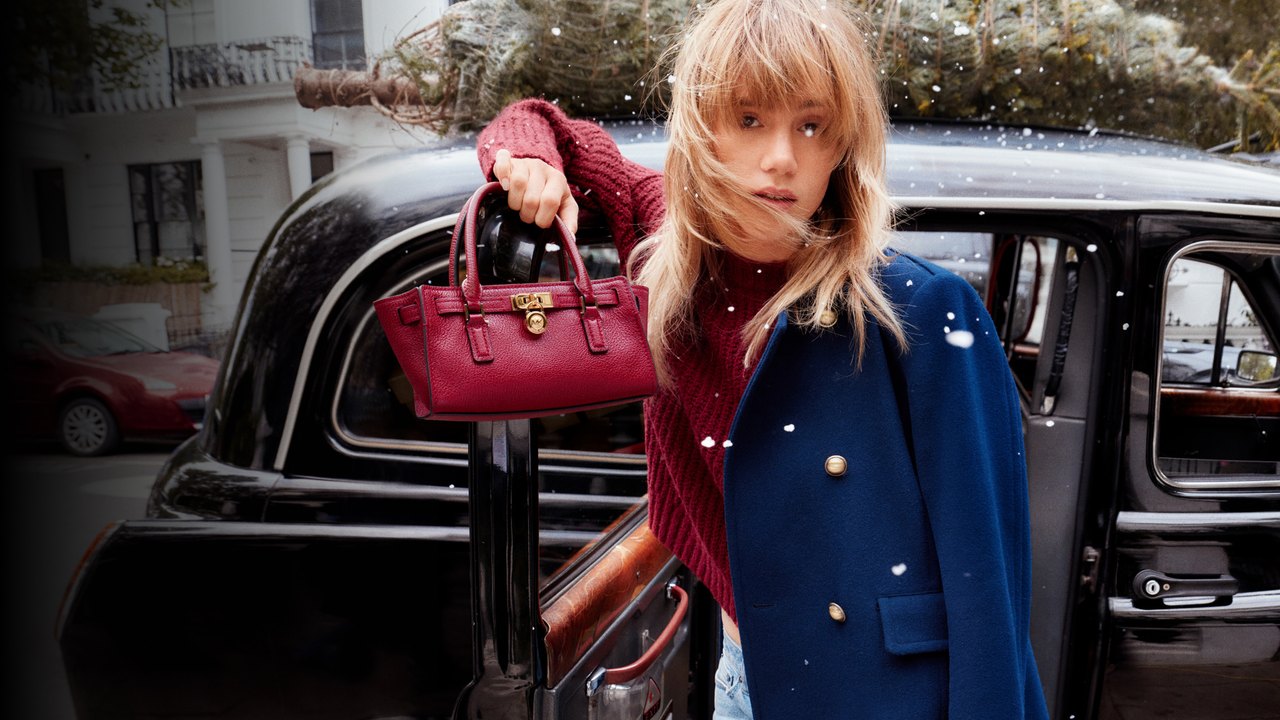
I had written Michael Kors off somewhere around 2017. Like a lot of people who care about clothes, I associated the name with giant logos, airport shops and bags that looked identical on every arm. It felt less like a brand and more like a phase the industry had already moved past.
Then a friend handed me a Hamilton tote she had bought secondhand and asked me to guess the price. I guessed wrong by a wide margin, and not in the direction she expected. The bag was well made, the leather had softened in the way good leather does, and the logo was small enough that I had to look for it. It did not look like the Michael Kors I remembered.
So I carried a Michael Kors bag for a month — the Hamilton, plus a mini bag and a watch — to find out whether the brand had actually changed or whether I had simply been looking at the wrong pieces. Here is the honest version.
The reputation problem is real
You cannot talk about Michael Kors in 2026 without addressing the elephant: for about a decade, the brand was everywhere, and not always in a good way. The logo-heavy years were a marketing triumph and a style liability at the same time. When everyone owns the same bag, the people who want something distinctive stop wanting that bag.
That reputation stuck longer than it should have. Even after the designs quieted down, the assumption remained that a Michael Kors bag was a status symbol rather than a good object. I shared that assumption. It took holding one of the newer structured pieces to realise I was judging a 2026 bag by a 2014 memory.
The useful lesson here is bigger than one brand. A strong identity can become its own problem — the very thing that makes a label recognisable is what makes it feel dated once the moment passes. The brands that survive that cycle are the ones willing to make quieter things without losing their hand.
What actually changed
The current range is noticeably more restrained. The Hamilton line, the mini bags, the smaller leather goods — they use the logo as an accent, not as the whole design. Hardware is more considered. Silhouettes are structured and architectural rather than slouchy and emblem-covered. A lot of this is a response to the last few years of fashion moving toward quieter, more expensive-looking things.
There is also a genuine range now, which was not always clear. At one end there is the outlet and the accessible price bands, where a well-made tote can cost a few hundred dollars. At the other there is Michael Kors Collection, the runway line, which sits firmly in luxury territory with prices to match. Judging the whole brand by the outlet rail is as unfair as judging it by the runway.
For someone building a smaller, better wardrobe, the interesting part is the middle: structured leather pieces that are neither throwaway nor heirloom, priced so that wearing them hard is not a tragedy. That is a useful place for a brand to be.
The bag I carried
The Hamilton tote became my default for a month — workdays, a weekend trip, dinners, the whole rotation. Three things stood out.
It stands up. The structured body holds its shape when you set it down, which sounds trivial until you have owned a bag that slumps into a puddle by lunchtime. Structure is what makes a bag look expensive even when the leather is not extraordinary.
The handles work. They are long enough to sit on the shoulder over a coat, short enough to carry in the hand, and they do not twist. Bad handle design ruins more bags than bad leather does.
The logo is small. It reads as a detail rather than an announcement. That single change is why I stopped noticing the brand and started noticing the bag — which is exactly what you want from something you carry every day.
The leather is good, not exceptional. It is corrected leather with a consistent finish: even colour, clean edges, hardware that has not tarnished in a month. It will not develop the rich patina of a vegetable-tanned Italian bag, and it does not pretend to. For the price band, that is the right trade.
What to buy first
If you are going to try Michael Kors, buy the piece where the structure and the leather do the talking.
The Hamilton tote is the one I would point people to. It is the bag that changed my mind, and it is the most defensible purchase in the range: useful size, clean shape, a logo that behaves. If you only buy one thing, buy this in black or a deep neutral.
A mini bag — the Nolita or the Whitney — is the easy experiment. Small crossbody bags suit the way we actually dress now, and Michael Kors understands proportion better than most. At under three hundred dollars, it is a low-stakes way to find out whether the brand works for you. The limitation is real: if you carry more than a phone, cards and lipstick, it will frustrate you.
A watch or a small leather good is the quietest entry. A clean-faced watch or a card case lets you judge the leather and hardware up close without committing to a bag. I have a slim card case that has aged better than pieces costing three times as much.
What to skip
Anything you are buying only because the logo is large. Those pieces are the reason the brand has the reputation it does, and they date faster than the quieter styles.
Also skip the head-to-toe logic. A logo bag with a logo belt and logo shoes reads as a billboard, whatever the brand. One recognizable piece per outfit is the ceiling.
And be careful with the very cheap end. A bag that costs under a hundred dollars is usually telling you something about the materials. That is fine if you want the look for one season, but it is not the piece that will change your mind about the brand.
The cost-per-wear case
This is where Michael Kors becomes genuinely interesting. A structured tote at three hundred dollars, carried three times a week for two years, works out to roughly a dollar a wear. Compare that with a trend bag at the same price that you stop reaching for after six months, and the maths is not close.
The calculation only works if you actually like the bag enough to carry it that often — which is why the quieter designs matter. A bag you wear constantly is a good purchase; a bag you save for best is an expensive ornament.
I kept reaching for the Hamilton because it was easy, not because it was exciting. That is the highest compliment I can give an everyday object.
The honest verdict
Michael Kors is not a brand I would have recommended a year ago. Having carried one for a month, I would now recommend the right pieces from it without hesitation — the structured totes, the small leather goods, the quieter designs that let the construction speak.
The brand has not become something different. I was looking at the wrong things. If you remember the logo years and wrote the whole label off, it is worth a second look — particularly at the outlet end, where the same shapes often cost less and let you test the water before you spend more.
Buy the structure, skip the logo, and judge the piece rather than the name. That is good advice for any brand, and it is the only way to get this one right.